The Forbes Fraser Hospital - Bath

Bath Paranormal • November 2, 2022

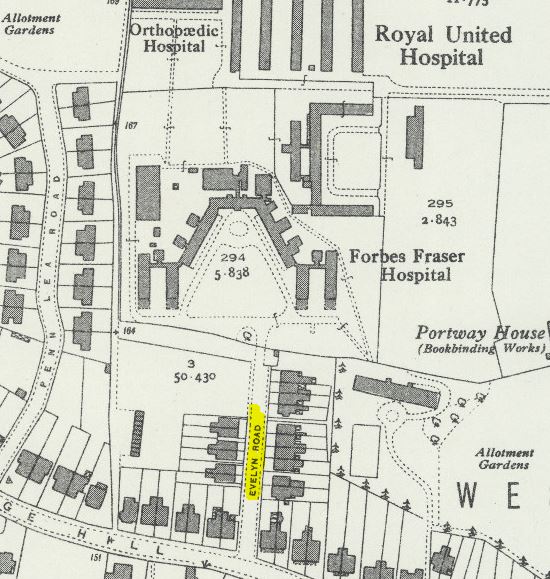
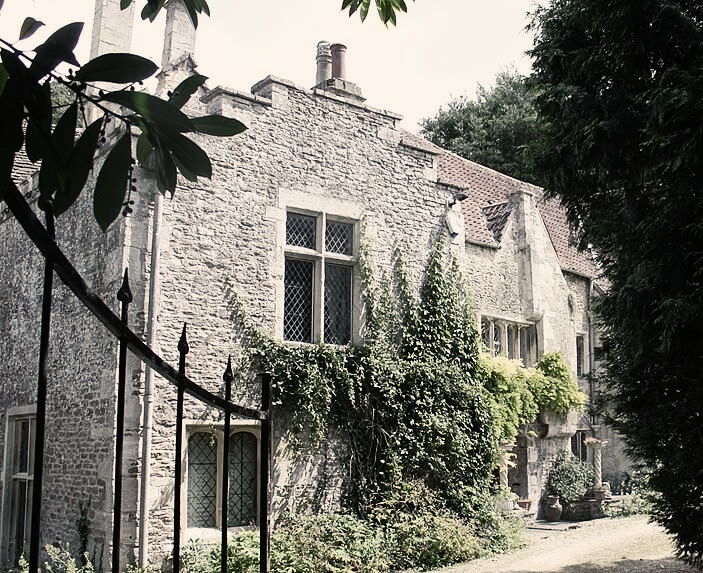
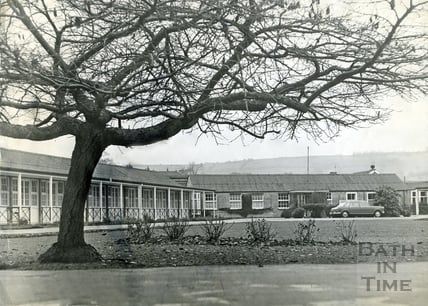
Royal United Hospital - Old Forbes Fraser Hospital Area

History -

In 1916 a hutted military hospital was established at the site which in 1919 became the Bath Ministry of Pensions Hospital.

In 1924 the Forbes Fraser Hospital and the Wessex Orthopaedic Hospital were established on the SW part of the site.

Forbes Fraser was a Senior Surgeon at the United Hospital, he devoted himself to linking up well-equipped cottage hospitals and hospitals in the smaller towns with the Royal United Hospital.

Only lack of funds retarded the carrying out of his plan, but none the less, on May 16th, 1924, HRH the Duke of Connaught was able to declare open the Royal United Private Hospital and the Orthopaedic Hospital, built on the site of the Bath War Hospital at Combe Park, Bath - a site that was acquired by the Managing Board of the Royal United Hospital, which afterwards carried out the intention of transferring the whole hospital there.

The buildings gave hospital accommodation for paying patients who could not afford nursing-home fees, and a ward for the treatment of crippled children.

The first patient was admitted to the Orthopaedic Hospital on the day of Forbes Fraser's death, which came on the 28th May 1924, shortly after the opening.

In order to commemorate Fraser's work as virtual founder of the Hospital at Combe Park, Bath, it was decided in June, 1924, by the committee of the hospital, that the institution should in future be connected with the name of Forbes Fraser,

Later on it became the maternity unit, I was born there, it was closed in 1980 and now repurposed.


Hauntings -

The area which is alleged to be haunted is where the old Forbes Fraser Hospital buildings are and around the Evelyn Road entrance.

Many eyewitnesses have seen a nurse in old fashioned uniform (1940's/50's) around the staff car park area, mid evening time, some have just seen her walking, others say she seems distressed.


Footsteps are also heard and the basement is said to have an eerie feeling.

Strangely there is a locked off office in the old Forbes Fraser building which has been known to mysteriously repeatedly 'ring' the main switchboard, is this an electrical glitch?

Some say its the old 'Matron'


Have you ever witnessed anything at the hospital? or know anyone that has? please let me know.


Words - © PJ Wallace Paranormal/ Bath Paranormal

Sources - Paranormal Somerset - Selena Wright

Somerset Heritage org, Livesonline, Bath Blitz org

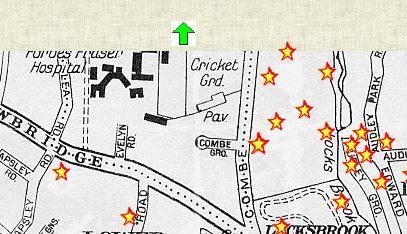
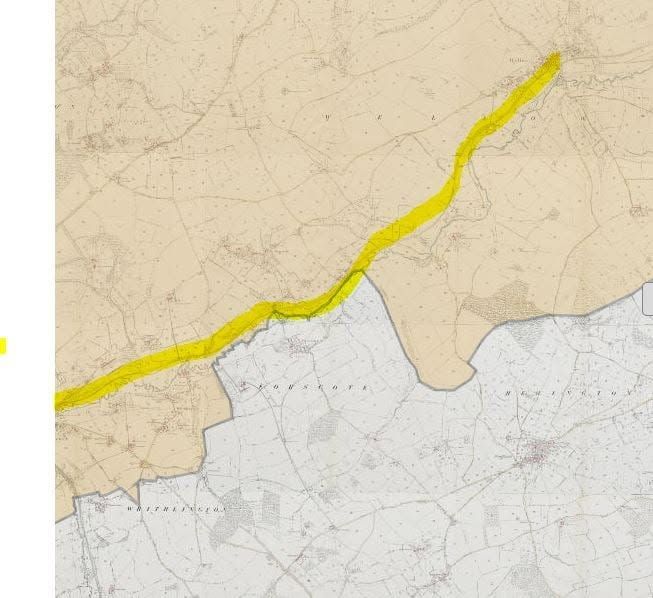
Photos - Bath in Time & Know your Place Maps c1920

https://bathintime.co.uk/image-library/image-overview/poster/21311/posterid/21311.html


Thoughts/Research -

I am not sure of the location and relevance but a surface brick air raid shelter survives between Blocks 13 and 14 of the RUH.

Two others once existed west of Corridor 3 but were demolished after 1975.

Others were also towards the south of the site and under the radiotherapy wing.

Could the nurse be linked to the war? and be running distressed to one of these?

Although none landed on the hospital, there was a cluster of 6 or so just behind Combe Park Road.

I would think that she was a residual ghost, and people see her replaying a moment in time.


Up until the late 1800's this original area was just fields and part of Newbridge Farm.


Lets see what comes up from possible eyewitness comments.. to be updated..


Share
By P Wallace February 1, 2026
Imbolc - The First Whisper of Spring Imbolc is an ancient Celtic seasonal festival celebrated around 1st February, marking the quiet turning point between winter and spring. It falls halfway between the Winter Solstice and the Spring Equinox and symbolises the return of light, renewal, and the first stirrings of life in the land. The name Imbolc is thought to come from an old Gaelic phrase meaning “in the belly”, referring to pregnant ewes and the promise of new life at this time of year. In the agricultural world, this was a subtle but hopeful moment — winter had not yet ended, but spring had begun to awaken. Imbolc is closely associated with Brigid (or Brighid), a pre-Christian Celtic goddess of fire, healing, poetry and the hearth, who later became venerated as St Brigid in Christian tradition. Both forms of Brigid represent protection, creativity, warmth and light returning to the world. Traditionally, Imbolc is a fire and light festival. Candles are lit to welcome back the sun, homes are gently cleansed or tidied, and simple rituals of renewal take place. One of the best-known customs is making a Brigid’s Cross from reeds or rushes, which is placed in the home for blessing and protection for the year ahead. In Somerset — with its ancient landscapes, springs, orchards and wetlands — Imbolc fits naturally into the rhythm of the land. Many people mark it quietly by walking in nature, looking for early signs of spring such as snowdrops, birdsong, or lengthening daylight. Others light candles at home, reflect on intentions for the year ahead, or honour the festival as a moment of spiritual and emotional reset. Imbolc is not a loud celebration. It is a soft festival, about subtle shifts — the promise of warmth, the returning light, and the gentle sense that something new is beginning, even while winter still lingers. It reminds us that growth often starts invisibly, beneath the surface, long before it can be seen. 
By Somerset Paranormal January 30, 2026
Holbrook Manor House - Castle Cary Road Wincanton History- Holbrook Manor began life as a modest farm around the year 1200, gradually evolving into a gentleman’s residence. From approximately 1550, the estate was owned by the Farewell family for nearly three centuries, shaping much of the house’s long and layered history. In 1946, Holbrook was transformed into a hotel and spa, later becoming a popular wedding venue, known for its grand setting and historic character. Hauntings Staff at Holbrook gave any unexplained activity the casual nickname “Billy-Joe”, though reports suggest more than one spirit is said to linger within the building. Guests have long described hearing footsteps and noises on the top floor, even when no one was staying there. There is said to have been a male suicide, involving a former resident who never wished to leave the house — and perhaps never did. A phantom lady has been seen in the corridor between the bedrooms known as Hardy and Langport, and has also appeared at the foot of a bed. In these same rooms, pillows have reportedly been found stacked in the centre of the floor, and knocks heard on locked doors with no one present. In a bedroom called Wookey Hole, a guest claimed a ghostly man walked directly through them. An older man has also been seen standing silently in the restaurant doorway. In the reception corridor, a boy and a girl were once said to follow the restaurant manager, tugging at his clothes. There is also a darker legend that murdered children were hidden within the walls — though this has never been verified. In the cellar, staff have reported bottles rattling, curtains swishing, and doors swinging open on their own.  Source - Paranormal Somerset by Selena Wright
By PJ Wallace January 18, 2026
Wassailing the Trees Wassailing is an ancient custom believed to have its origins in Anglo-Saxon England. The word itself derives from a phrase meaning “be in good health.” Over time, the tradition developed along two distinct but related paths. The first form of wassailing involved visiting homes with a communal bowl of spiced drink. Revellers would knock at doors, offering seasonal good wishes in exchange for food, drink, or small gifts. This custom became particularly associated with Christmastide and was a way for households to share goodwill and prosperity for the coming year. In medieval England, wassailing visits also provided an opportunity for the lord of the manor to show gratitude to his tenants for their labour. Those who went from house to house often entertained families with music and dancing, commonly accompanied by an accordion. Refusing to offer hospitality to wassailers was considered risky, as it was believed a curse might be placed upon the household. Much like modern reactions to carol singers, opinions on wassailing varied. Some people regarded it as vulgar or disruptive—an excuse for rowdy behaviour and demands upon wealthier neighbours. By the 12th century, this strand of wassailing was gradually replaced by the more Christianised tradition of carol singing, which emphasised religious songs and the collection of alms for the poor. This adaptation made the practice more acceptable to both the Church and higher levels of society. The second strand of wassailing was rooted firmly in the countryside and focused on giving thanks to cider-bearing apple orchards. This tradition was especially strong in the West Country, and most notably in Somerset, long regarded as England’s cider heartland. Before 1752, dates in Britain were governed by the Julian calendar. When the country adopted the Gregorian calendar to align more accurately with the solar year, eleven days were removed. Despite this official change, many rural communities continued to observe longstanding customs according to the old calendar. As a result, the 17th of January became the most common date for orchard wassailing. This form of wassailing is believed to have pagan origins. Alongside expressions of gratitude for past harvests, the rituals were intended to drive away evil spirits and ensure fertility for the year ahead. Proceedings typically began around 7 p.m. A bonfire would be lit within the orchard, and the orchard owner would provide a wooden goblet of hot, spiced cider. This wassail drink often contained roasted apples bobbing among pieces of toast and spices. The revellers gathered around the oldest apple tree in the orchard, which was believed to pass its fertility to the younger trees. A circle was formed, and the appointed Queen of the wassail was lifted into the tree’s branches to lead a ceremonial toast. Singing, dancing, drumming, and general merriment followed. Together, the gathered crowd would sing: Old Apple Tree, I wassail thee, And well mayst thou bear, Hat full, cup full, rooms full, For cider bright and fair. Cider was then poured around the tree’s roots and thrown into its branches as an offering of thanks and encouragement for a plentiful harvest. The soaked pieces of toast were placed among the roots as gifts for the robins. Once the Queen had safely returned to the ground, the men would fire shots up through the branches to frighten away any lingering evil spirits. At the height of the tradition, this celebration could continue late into the night, with multiple local orchards visited and honoured in turn. Wassailing has not disappeared entirely.  The custom is still observed in parts of Somerset today. In Curry Rivel, the celebration takes place on the 5th of January and includes the burning of the ashen faggot, while Carhampton continues to observe the tradition on the old-calendar date of the 17th of January. More local wassailing events are now at Kilmersdon and Coleford. Images - lumix2004 - Pixabay , Google, PJW Artworks
By Somerset Paranormal January 10, 2026
Curry Mallet Manor, Curry Mallet A private residence, Curry Mallet Manor is centred on a late-15th-century great hall, believed to stand on the site of William Mallet’s castle keep dating from 1060. Legend tells that three subterranean streams flow beneath the house, said to lead toward the holy well at Glastonbury Tor. Over the years, a number of human skeletons have been uncovered in the gardens, and the grounds are reputed to be especially haunted. Within the house, the soft rustle of an Elizabethan lady’s gown is often heard. When she is glimpsed, she is described as wearing keys at her belt, suggesting she may have been a housekeeper. Another apparition, known as the “pacing man,” is said to haunt the Great Hall — an Elizabethan figure dressed with a ruff, endlessly walking its length. In the courtyard, the echoes of clashing swords are still heard, as though a long-forgotten duel continues to replay itself through time.  Source - Paranormal Somerset - Selena Wright Rewritten by Somerset Paranormal Image - Google
By Bath Paranormal January 3, 2026
Is anyone else listening to the latest Uncanny series? The first episode is a truly intriguing account of a “Haunted Street” in Bath. Virginia moves to a quiet street in the city of Bath with her young family. A series of strange events cause her to doubt her own sanity, until an exchange with a neighbour reveals that she's not the only one experiencing scary occurrences, where similar phenomena are reported in every house — many of them notably water-related. It’s well worth a listen to hear all the details. In the follow-up episode from last week, Danny speaks to CJ Romer, who mentions a case from somewhere in Bath dating back to 1963. This case describes a remarkably similar set of experiences: water behaving strangely and the same perceived type of haunting, although occurring in a different part of the city. What I also found particularly fascinating is Evelyn Hollow’s theory involving the Roman curse tablets. The Bath curse tablets are a collection of around 130 Roman-era curse tablets (or defixiones in Latin), discovered in 1979/1980. These tablets invoke the intercession of the goddess Sulis Minerva, often calling for the return of stolen goods and cursing the perpetrators of the thefts. The Roman Baths and the temple dedicated to Sulis Minerva in Bath — founded by the Romans as Aquae Sulis — were excavated between 1978 and 1983 by a team led by Barry Cunliffe and Peter Davenport. During excavations of the Sacred Spring beneath the King’s Bath in 1979/1980, around 130 of these tablets were uncovered. Evelyn raises the idea that, with so many curse tablets placed into the waters of the Roman Baths — many carrying negative intent — something may have been “activated” in the water deep beneath the city itself. I won’t paraphrase her exact words here, but it’s worth listening to hear how she explains it. I find the theory intriguing, although from my accumulated ghost accounts from around the city, there don’t seem to be many other hauntings that are clearly water-related. Still, it’s an interesting possibility. Have you heard of other water-related hauntings in Bath? What did you think of the Uncanny Haunted Street episode? Happy New Year to you all. Image Source - Daily Mail/Bath Chronicle #hauntedbath #uncanny #romanbaths #bathparanormal
By Somerset Paranormal December 19, 2025
The Sparkford Inn: History and Local Legends The Sparkford Inn dates back to the 15th century and has long been an important part of the local area. Originally a coaching house, it provided food, rest, and fresh horses for travellers passing through Somerset. Over time, it continued its role as a popular hostelry, later serving those travelling along the A303 and via the nearby railway. The inn has also acted as a posting house and a meeting point for local hunters, making it a well-used social space within the community for many generations. With so many people passing through its doors over the centuries, the Sparkford Inn has developed a strong connection to local history and shared memories. Alongside its historical role, the inn is well known for a number of reported paranormal experiences. The most commonly mentioned is the ghost of a young boy, believed to be around seven years old, who is said to run through the bar, pool room, and dining area. He is often described as giggling and wearing scorched clothing, with visible burns. Other unexplained activity has also been reported, including whispers heard in empty rooms and mild poltergeist behaviour such as objects moving or appliances switching themselves on and off. In addition, the presence of a man and a woman is said to be associated with one of the rooms. These stories have led to investigations into the inn’s haunted reputation and remain part of its ongoing local legend. Have you ever heard of, or experienced, any ghostly encounters at the Sparkford Inn?  © Somerset Paranormal Image created by PJW Artworks
By Somerset History & Mystery November 4, 2025
The Enchanted Hawthorn: Somerset’s Tree of Fairies and Protection In Somerset and across Britain, the humble hawthorn (Crataegus monogyna) weaves its thorny branches deep into local folklore. Revered and feared in equal measure, it stands at the crossroads of magic and faith—guarding thresholds, sacred wells, and the edges of fairy realms. The Miracle of the Glastonbury Thorn Perhaps the most famous hawthorn of all grows—or once grew—upon Wearyall Hill in Glastonbury. Legend tells that Joseph of Arimathea, arriving in England after the Crucifixion, planted his staff into the Somerset soil. Miraculously, it took root and blossomed—flowering not once, but twice a year: in May and again at Christmas. This “Glastonbury Holy Thorn” became a cherished symbol of divine grace, with a sprig from its descendant still sent to the monarch each Christmas.  The Fairy Tree In broader folklore, hawthorn trees are known as “fairy trees”, said to belong to the fae themselves. Lone hawthorns standing in fields or by wells were often left untouched, for fear of offending the otherworldly beings who guarded them. These trees marked boundaries between worlds—places where the veil between the human and the magical grew thin. Many country folk would leave offerings or tie cloth strips, known as clooties, to their branches in hope of a blessing or a wish granted. A Protector in Bloom Despite its delicate blossoms, hawthorn has long been viewed as a tree of protection. It was planted beside homes to ward off lightning and evil spirits, and carrying a sprig was said to keep travellers safe. Yet its power was treated with care: while hawthorn flowers decked the garlands of May Day celebrations, bringing them indoors at any other time was thought to invite death or misfortune. Hawthorn also played a part in hand-fasting rituals, its blossoms symbolising love that endures through both joy and hardship—much like the tree itself, beautiful yet thorned. A Symbol of Thresholds Whether sacred to fairies, blessed by saints, or cherished for its protection, the hawthorn stands as a living symbol of liminality—where life and death, blessing and curse, heaven and earth all meet beneath its boughs. To this day, it blooms as a reminder that even the simplest hedge can hold the heart of a legend. Somerset History and Mystery Image - Somerset Photography
By P Wallace October 30, 2025
They moved to the village in the spring of 1952, when the hedgerows were just beginning to flower and the air still carried the faint chill of winter. Arthur and Lillian made their home in a low, ivy-clad cottage on the edge of the village green, where the ancient ruined castle loomed over the village like a wounded sentinel. The locals spoke of the castle with the careful hush of those who know better than to invite attention. It had been shelled during the Civil War — a jagged rent in the south wall showed where the cannonball struck, still blackened after three centuries. Yet older evils lingered there too: the witch trials, the whispered confessions, the women led weeping to the moat. Lillian was fond of walking in the evenings, her cardigan buttoned tight, listening to the soft thud of her shoes on the damp lane. The castle drew her — she said it had a sadness about it, like something forgotten but not gone. Sometimes, as dusk fell, she fancied she heard voices by the water, a low murmuring as if the reeds themselves whispered. One night Lillian woke to find the room filled with pale light. From the window she saw her — a woman in flowing white robes gliding across the moat, her head bowed, her hair silvered by moonlight. Lillian thought at first it was reflection, until the figure paused and turned as though sensing she was seen. Her face was lost in shadow, but the impression was of infinite sorrow — and something pleading. Arthur dismissed it as a dream until, a week later, he came in white-faced from the pub, swearing he’d seen a mounted knight pass silently through the square. The horse’s hooves made no sound; its rider was head bowed, the armour dulled by centuries of dust. After that, things changed. Footsteps creaked on the stairs though neither moved, voices — indistinct, pleading, angry — seeped through the night air. Once, during a sleepless, restless Summer night, Arthur stepped outside to breathe in the crisp, ghostly air of the witching hours. Behind him, he glimpsed the faint outline of a grand hall, its walls bathed in flickering torchlight. Shadows of dark, floating figures drifted through the space, while faint strains of music and laughter echoed, as if an ancient celebration were replaying itself in the still of the night. The scene felt suspended between past and present, a secret revelry hidden from the waking world. Drawn by an irresistible curiosity, Arthur moved closer, and the outline resolved into a magnificent castle rising from the edge of a glimmering moat. Its stone walls shimmered under the moonlight, and the water reflected the phantom torches with a trembling glow. Every ripple seemed to whisper the stories of lords and ladies long gone, their mirth and sorrow intertwining in a haunting symphony. Arthur felt as though he had stepped into a memory etched into the very stones, a place where time itself paused to watch and listen. By autumn, the couple had grown accustomed to the castle’s presence. The ghostly whispers and fleeting shapes became part of the quiet rhythm of the village, strange companions rather than threats. They would walk by the moat together at dusk, sometimes catching a glimpse of the pale-robed woman and smile at each other, sharing a shiver that was equal parts fear and fascination. Though the ruins held the weight of centuries and sorrow, life went on. The villagers eventually accepted the couple, and the castle — scarred, mysterious, haunted — remained a reminder that the past is never truly gone and sometimes, on quiet nights, Arthur and Lillian would pause by the moat and hear the softest echo of a distant horse, or the faintest sigh of someone longing for the light — a reminder that even in darkness, there is a strange, enduring beauty. Footnote: While Lillian and Arthur are figments of imagination, the castle itself stands in reality, and the eerie lights, shadows, and unexplained occurrences that inspired this tale are drawn from true ghostly accounts associated with its ancient halls and the surrounding village . © P Wallace - Somerset Paranormal Image © PJW Artworks
By Somerset History & Mystery October 30, 2025
Punkie Night: A Somerset Spectre’s Tradition When the last Thursday of October descends upon Somerset, the air grows chill and the fields of the West Country whisper with an ancient song. For on this night—Punkie Night—children parade through the lanes, their faces lit by the flickering glow of hollowed roots. They chant a haunting refrain that echoes through the darkness: "It’s Punkie Night tonight, It’s Punkie Night tonight, Adam and Eve would not believe, It’s Punkie Night tonight." No soul can say for certain how this eerie rite began. Some claim it is bound to Hallowe’en itself, that night when the veil between worlds thins. The word “Punkie”—an old English name for a lantern—hints at the light that defies the shadows. But unlike the modern pumpkin, these lanterns were once carved from swedes or mangel-wurzels, their twisted grins glowing from pale, gnarled flesh. Others whisper that Punkie stems from punk—tinder that sparks fire—perhaps a clue to the old ways now half-forgotten. Across the centuries, the custom has glimmered in many places: upon the windswept crest of Castle Neroche in the Blackdown Hills, through Long Sutton, and most enduringly, in Hinton St George and Lopen, where the night still belongs to the Punkies. The Legends Behind the Lanterns Local lore tells of the men of Hinton St George, who would vanish to the fair at nearby Chiselborough, returning home drunk and stumbling through the black October night. To find their way, they set candles within hollowed roots, their makeshift lights bobbing eerily in the mist. Yet some tales turn the story on its head. They say it was the women who carved the lanterns—fashioning Punkies from the harvest’s remains—and went searching for their wayward husbands. Some even knocked at doors, begging for mangel-wurzels and candles, their plea giving birth to the Punkie Night song that still drifts through village lanes. Others tell that when the drunken men glimpsed those ghostly lights, they mistook them for spirits or “ghoulies,” fleeing home in terror—proof that even the living may be haunted by their own folly. Though cloaked in folklore, the roots of Punkie Night stretch much deeper—a flicker of Samhain’s ancient fire, carried down through the centuries.  It is a night when the old world breathes again, when lanterns gleam like souls in the dark, and the West Country remembers that not all lights are meant to guide the living. ©Somerset Paranormal #punkienight #somersetfolklore #somersettraditions #somersetpunkienight #Halloween #halloweentraditions
By P Wallace October 28, 2025
For this Halloween I thought I would try something a bit different and try my hand at writing a ghost story. This semi fiction story is set in a location in Bath, in the mid to late 1990's and is based on some real life events and experiences by real people in that location over the years, with names changed and with a little help from AI to bring it to life. The Customers that never left.... The restaurant in one of Baths most historical and affluent areas had opened only six months before, its proprietors keen to boast that it was “modern dining within a piece of Bath’s history.” The building had once been Elliston & Co, a grand department store frequented by the city’s most fashionable ladies and in its heyday a destination for royalty. Though the marble counters and mahogany cabinets had long since been replaced by gleaming tables and silver cutlery, the air still carried the faint scent of lavender polish and time. It was a handsome space — lofty windows, ornate plasterwork, and a graceful wooden staircase curving to a mezzanine bar. Yet after closing, when the laughter and the music had faded, the building changed. Its echoes lengthened, its shadows grew bold, and the staff began to whisper. The first to notice was the chef, a practical man with no patience for tales. One regular early Friday morning, while prepping for the busy day ahead, he heard a sharp rapping upon the long window that was between the kitchen and restaurant, at that point in time it was covered over to conceal the kitchen from the restaurant and distractions beyond. Three loud booming knocks — slow, deliberate, as though delivered by a gloved hand. He froze, the knife slipping from his fingers. Beyond the glass lay the empty restaurant, still as a grave in the early morning, as he was the only living soul in the building. When he pressed his palm to the glass, it stung with cold, though the room behind him was warm. A week later, the waitress — a timid girl named Lisa — began to complain of a presence that followed her after hours. She could feel it when she moved between the tables to polish cutlery or gather napkins. It was not merely unease, but the distinct impression of someone standing close behind her, breathing softly. Once she turned so swiftly that her ponytail whipped her shoulder, and she caught a whiff of violets — an old perfume, cloying yet delicate, gone almost before she noticed. The bar staff laughed, until they too began to hear the footsteps . They came from the wide original stairwell that led from the front door, slow and measured — the step of a man ascending while carrying a heavy load. Each night the tread reached the landing, paused, and faded. When the barman dared to go and have a look, the stairs lay empty, though the air was thick with the smell of dust and old cloth. Their manager, a Bath native with a fondness for local history, began to enquire. The archives told him that in 1924, Elliston & Co. had suffered two tragedies. A lady shopper, overcome by some sudden seizure, had died in the shoe department before assistance could be fetched. Not three months later, a gentleman clerk had fallen from a stockroom ladder and broken his neck. There had been talk of ill luck, then the matter was quietly forgotten. After that discovery, the staff grew more cautious. They never spoke openly of “ghosts,” yet a silent understanding spread among them. The waitress avoided the far end of the dining room after midnight; the barman never went down to the cellar alone, as that was also a very scary dark and frightening area with a heavy oppressive feeling as it was under the very old vaults at the bottom of the building. The chef, though he mocked them all, had begun to whistle as he worked — but after that one day, the knocking never happened again to his knowledge. But things were about to take an even spookier turn- One November night, a heavy fog crept up from the river. The city’s lights burned dimly behind it, and within Elliston’s Restaurant, the world felt muffled and apart. The staff lingered after closing, reluctant to step outside. The bar lights glowed low, the last glasses polished. Then came the footsteps again — clear, deliberate, climbing the stair from the cellar. Everyone froze. The barman exchanged a glance with Lisa, whose face had gone pale as milk. Slowly, he crossed the floor and opened the door, then within it, the faint outline of a man appeared — tall, stooped slightly at the shoulders, dressed in dark waistcoat and rolled shirtsleeves. He ascended the final step and halted, looking about as though puzzled to find strangers in his place of work. The light flickered against his face, and they saw it was drained of all colour, like smoke trapped in glass. Behind him, the faint rustle of skirts drifted from the hallway. A woman’s figure emerged, an older lady pale and fine-boned, her hat pinned neatly, her gloved hand resting upon a small handbag. Her gaze travelled over the dining room — the tables, the linen, the flickering candle on the bar — with mild curiosity, as though seeking something once familiar. The chef dropped his towel. Lucy gave a small gasp. The lady turned toward the sound, her expression gentle, uncertain. “Excuse me,” she said softly, her voice the faintest echo of air through silk, “might you direct me to the haberdashery?” No one answered. The barman could only nod toward the stairwell. The lady inclined her head with a gracious smile, then turned to the ghostly clerk beside her. Together they descended the steps, the air growing still in their wake. When at last the fog cleared and silence returned, the staff stood motionless for some time. Then the chef, in a trembling hand, poured a small glass of sherry and set it upon the counter beneath the mirror. It became a custom after that — a quiet offering whenever the lights dimmed and the building creaked with memory. The mirror above the bar, once bright, now held a faint smudge that no polishing could remove — two silhouettes side by side, caught forever in the reflection. And though Elliston’s no longer sold gloves or silks, those who worked the late shifts swore that, sometimes, in the hush before dawn, the scent of violets still drifted through the room. For even now, the last customers had yet to leave. © PWallace/ Bath & Somerset Paranormal Images © Somerset Paranormal