The Ghost of Cranmore Tower
The Ghost of Cranmore Tower
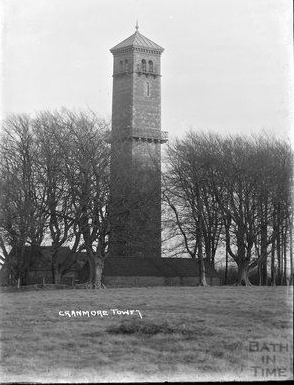
High on the Mendip Hills, overlooking the Somerset countryside, stands one of the area’s most distinctive landmarks — Cranmore Tower.
At first glance, the tower looks like the remains of something much older.
In fact, this imposing stone structure is a Victorian folly, built between 1862 and 1864 for John Moore Paget of nearby Cranmore Hall.
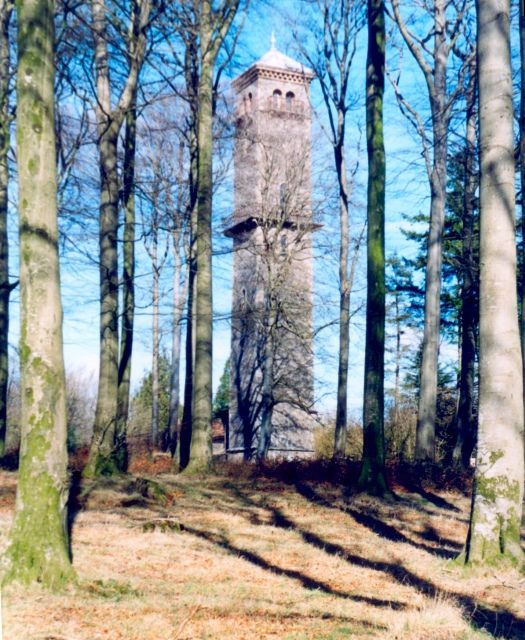
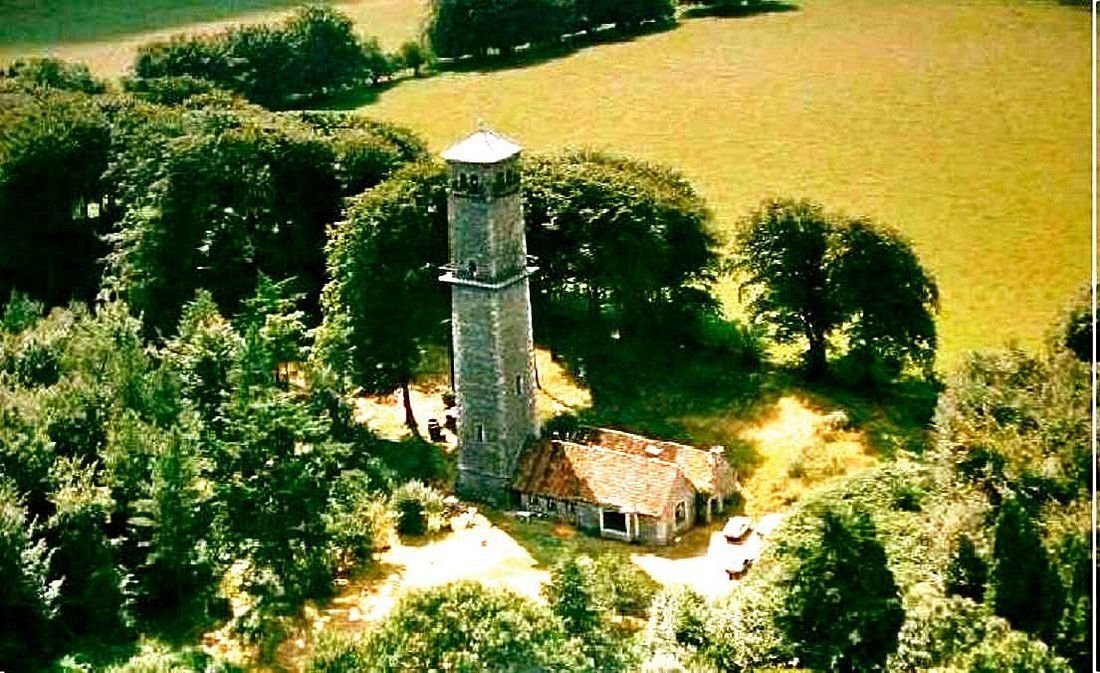
Designed by the architect Thomas Henry Wyatt, the tower rises approximately 45 metres above the surrounding landscape and stands on a site around 280 metres above sea level, making it the highest point along the Mendip Way.
It was intended as a place from which to admire the spectacular views across Somerset, rather than as a defensive structure.
With its balconies, arched openings and ornate Gothic appearance, it certainly has the atmosphere of an ancient watchtower — despite being distinctly Victorian.
Today, Cranmore Tower is privately owned and visitors are no longer permitted, but its history is considerably older than the Victorian building itself.
A Roman Mystery
During restoration work in the 1980s, something remarkable was discovered beside the tower.
The remains of a Roman fort were uncovered, together with a hoard of coins.
The discovery revealed that this high point of the Mendips had been of significance long before the tower was built.
It is perhaps fitting that a place with such a long history should eventually acquire a few stories of its own.
A Wartime Lookout
The tower gained another chapter in its history during the Second World War, when its height made it an ideal lookout position.
It was used by both the Home Guard and the Royal Corps of Signals, watching over the surrounding countryside from one of the highest points in the area.
One can only imagine what it must have been like to stand at the top during wartime, looking out across the darkened Somerset landscape, knowing that the tower was being used as part of the country's defence.
And perhaps it was during this period that Cranmore Tower acquired some of the atmosphere that still surrounds it today.
The Mysterious Figure
There are reports of an occasional male presence within the tower, sometimes described as the apparition of a man who may have been a former tower keeper.
The figure is not said to be particularly frightening.
Instead, he appears to be more of a fleeting presence — the kind of apparition that is noticed out of the corner of the eye or sensed rather than clearly seen.
Adding an unusual twist to the story, there is said to be a small statue set into an alcove on one of the tower's outer walls which bears a resemblance to the reported figure.
Whether this is simply coincidence, or whether the statue helped inspire the story of the ghost, is difficult to say.
There is, of course, no way of knowing whether the reported presence is connected to the tower's history at all.
But with its isolated position, long association with watchmen and wartime lookouts, and the discovery of the Roman fort beside it, Cranmore Tower certainly provides plenty of material for the imagination.
Thoughts -
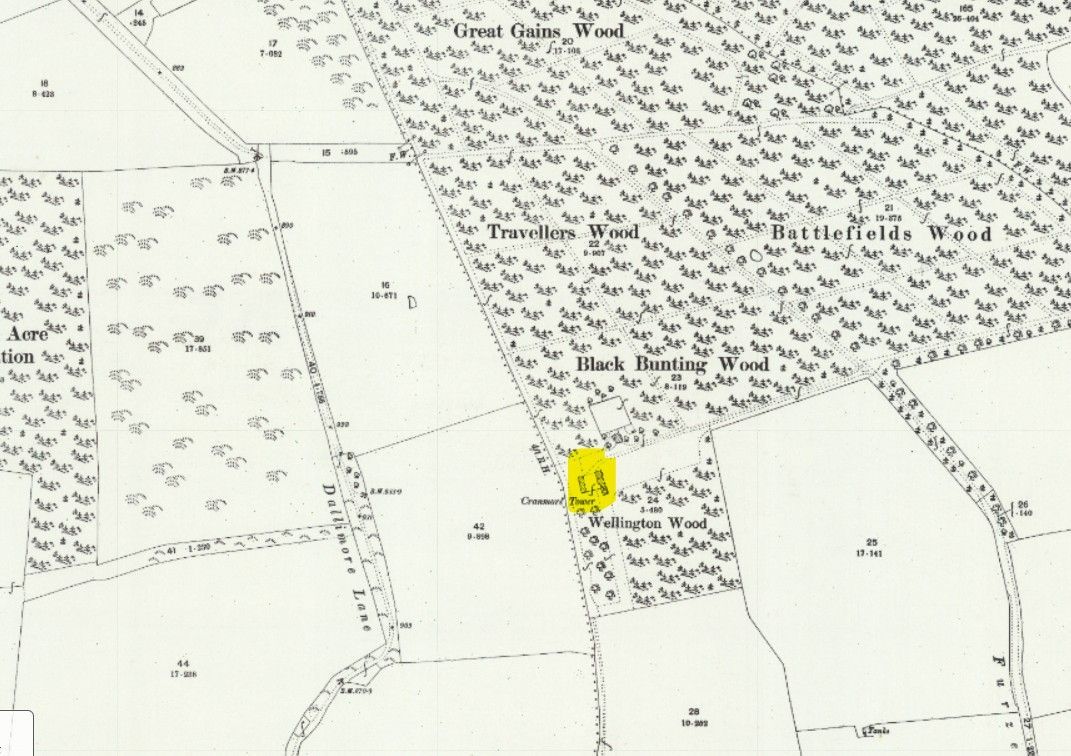
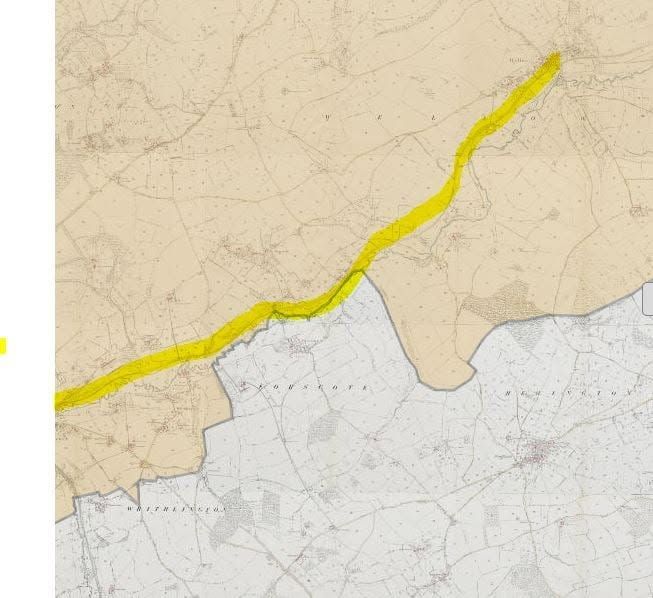
On looking at old maps, its interesting that the tower is situated near a small wood called Battlefields Wood, further research shows that
it is a forest area that covers an area of approximately 100 acres and is renowned for its historical significance, as it was the site of various battles during the English Civil War in the 17th century.
The wood is located near the village of Battlefields, which was named after the battles that took place here.
Although on viewing the Battlefields Trust site, nothing shows for this area..
© Somerset Paranormal
Source - Paranormal Somerset - Selena Wright
Images - 1920, George Love Dafnis, Bath in Time & Trip Advisor