What lies Beneath ? St James Park – Bath
St James Park, aka Pigeon Park – Bath
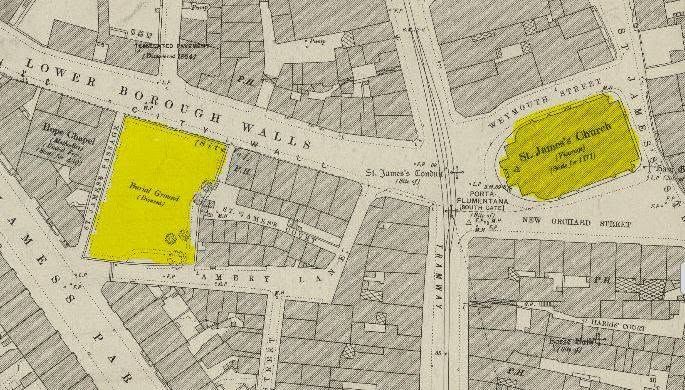
Tucked away between Lower Borough Walls and St James's Parade, with St James Passage running behind it, sits a small patch of green space in the heart of Bath.
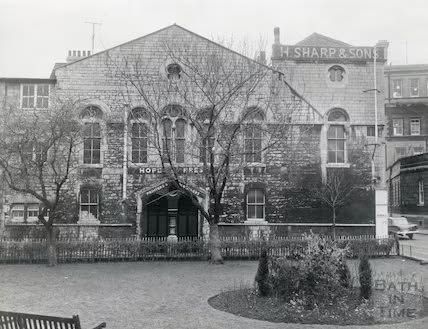
To the front are the former Hope Chapel buildings, now converted into flats, and St James Memorial Hall.
On a sunny day, it is an unremarkable little park, often occupied by people enjoying their lunch, surrounded by the large population of pigeons which have given the place its familiar local nickname, Pigeon Park.
But beneath this seemingly ordinary patch of grass lies a much darker history.
A former burial ground, thousands of burials, an alleged story of a local legend involving a curse which supposedly prevented the land from ever being developed.
And, perhaps, a few more recent unexplained happenings in the neighbouring buildings.
St James's Burial Ground
St James's Church once stood nearby, on the site now occupied by the modern shopping and banking premises around the former church location.
The church itself was built in the 18th century, with work beginning in 1768, although the history of worship on the site went back further.
The church was badly damaged during the Bath Blitz in April 1942 and was eventually demolished in 1967.
The burial ground, situated between Lower Borough Walls and St James's Parade, had a considerably long history.
According to Bath Record Office, the burial ground was closed in 1855. The Bath Burial Index estimates that 9,905 individuals were buried here between 1718 and 1855.
That is an extraordinary number of people for such a small area.
In 1775, the roadway of Lower Borough Walls was widened, taking in part of the burial ground.
No memorials survive in their original positions today, and there is no way to identify or photograph individual burial plots from the present-day park.
The surviving burial ground has undergone several stages of landscaping, but the former cemetery remains beneath the modern green space.
The history of St James's Church also includes a separate episode involving human remains.
When the ruined church site was being prepared for sale, bodies in lead coffins and numerous human bones were removed from beneath the church.
On 11 February 1960, these remains were reinterred in a plot at the northern end of Bath Abbey Cemetery, under the supervision of the Archdeacon of Bath.
These were remains from beneath the church itself, rather than the neighbouring burial ground at Pigeon Park.
What Became of the Burial Ground?
The future of the old burial ground was not always straightforward.
In 1925, a proposal was made to use the ground as the site of a Men's Club. The parish council decided that the time was not right and asked for the scheme to be held in abeyance for twelve months.
The following year, the Parks Committee attempted to acquire the ground for use as a playground.
There were also proposals to turn the space into a pleasant garden, with flower beds and seating for older residents. However, the church authorities initially resisted the plans.
Eventually, the area became the small public green space we see today.
Interestingly, some of the old gravestones were removed and relocated to paths surrounding St Philip and St James Church at Odd Down.
The Gordon Riots – A Chapel Destroyed
There is another rather turbulent chapter in the history of the neighbouring buildings.
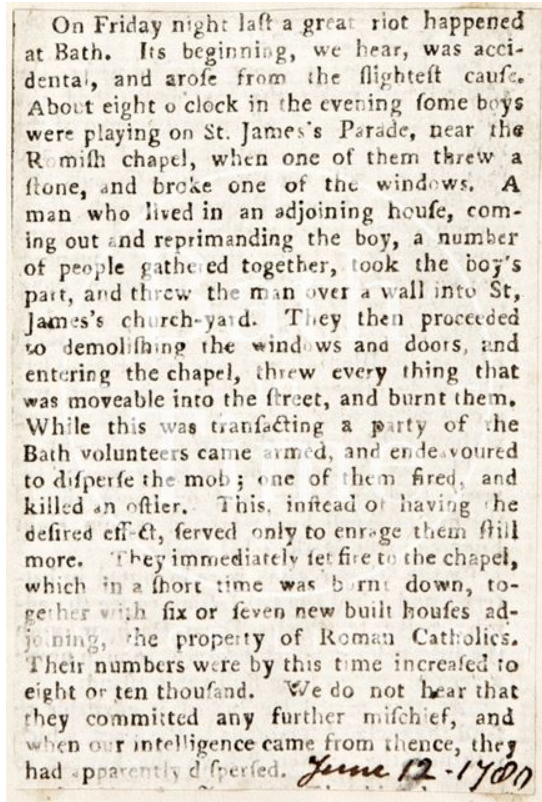
In June 1780, Bath experienced its own outbreak of anti-Catholic violence during the Gordon Riots, a period of widespread unrest which had begun in London.
On Friday 9 June, a mob descended upon the newly built Roman Catholic chapel in St James’s Parade, attacking and destroying its interior.
The adjoining residence of Catholic priest Dr John Bede Brewer was also ransacked.
Despite attempts by local volunteers to protect the buildings, the violence escalated. By around two o’clock in the morning, the chapel, the priest’s house and four adjoining properties were ablaze.
The chapel was left in ruins.
The building was subsequently restored and used by Protestant congregations before eventually becoming associated with the Friends’ Meeting House.
In 1866 it was purchased by the Methodist Free Church and given the name Hope Chapel.
So the former Hope Chapel buildings beside Pigeon Park have a rather turbulent religious history, having stood on a site associated with one of Bath’s most violent episodes of anti-Catholic unrest.
The Neighbouring Buildings – Are There Other Stories?
The history of Pigeon Park is interesting enough, but there are also reports of unexplained experiences from neighbouring premises along Lower Borough Walls.
One account concerns a pet shop situated behind the park, where workers have reportedly experienced strange noises and sightings of a little girl. There have also been reports of animals becoming unsettled for no apparent reason.
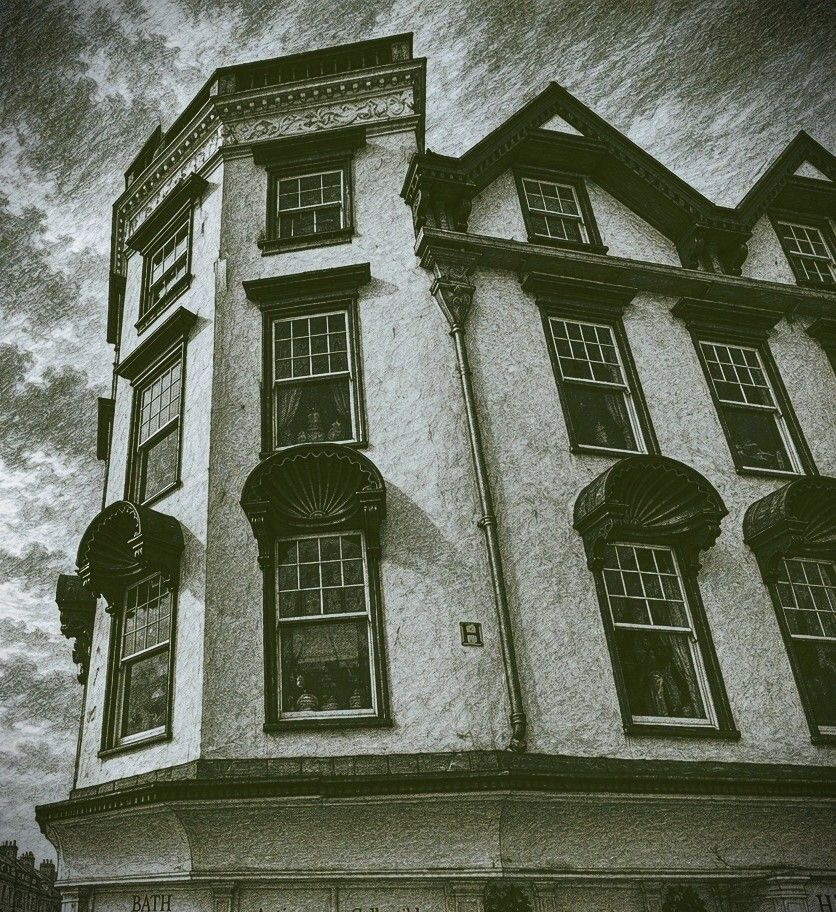
Another business along the same stretch has reportedly experienced what staff describe as poltergeist activity, along with an uncomfortable, foreboding atmosphere in its cellar.
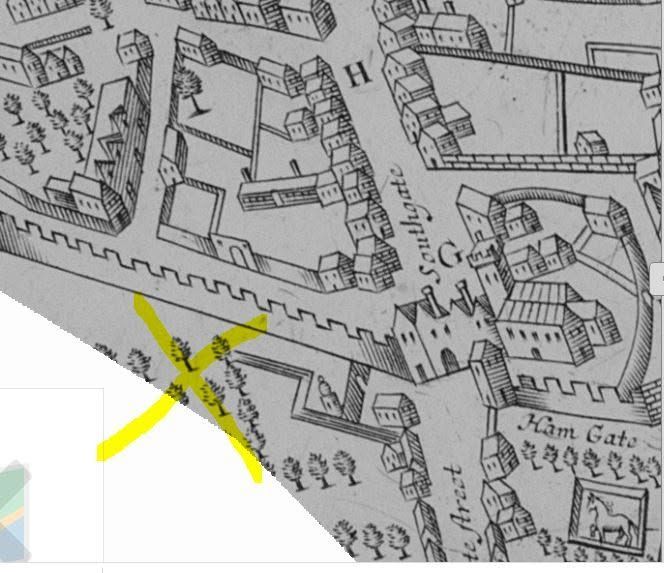
The cellar is particularly interesting because it contains an exposed section of the old medieval city wall.
Whether these experiences have anything to do with the former burial ground, the surrounding historic buildings or simply the atmosphere of these old premises is impossible to say.
I have not established a direct connection between these reports and Pigeon Park itself, but they certainly add another layer of intrigue to this small corner of Bath.
A Witch's Curse?
There is an alleged local legend associated with Pigeon Park which tells of a woman accused of witchcraft during the 15th century.
According to the 'story' she was condemned and executed at this location, supposedly burnt at the stake.
Before her death, she is said to have uttered a curse upon the ground where the execution stake had stood, declaring that the land should never be built upon.
The story goes on to suggest that this curse is the reason the small plot has remained undeveloped, despite its valuable position in the centre of Bath.
But how much truth is there to this tale?
The site lies close to the route of Bath's former medieval city defences, outside the historic city boundary.
For now, the story of the 15th-century witch and her dying curse must remain exactly what it is: unverified local folklore, rather than established history.
** Update - after publishing it appears from a local source that this witch curse story was actually made up by someone they knew, what a shame as its a wonderful piece of folklore.
A Little Park with a Long Memory?
It is rather strange to think that beneath the grass where people now sit eating their lunch, thousands of people were once laid to rest.
With reports of unexplained activity in the neighbouring buildings, I am left wondering whether there is more to this little corner of Bath than meets the eye.
Have you ever experienced anything unusual around Pigeon Park, Lower Borough Walls or the surrounding buildings?
I'd be particularly interested to hear from anyone who has worked in the neighbouring shops or buildings and has their own experiences to share.
Sometimes the smallest and most overlooked places have the most interesting stories to tell.
Historical sources and further reading:
Bath Record Office – St James Burial Ground.
Bath Burial Index – St James, Bath (1718–1855).
Bath in Time – historical photographs and records of Hope Chapel.
Know Your Place – Bath historical mapping.
Find a Grave – burial and cemetery references.
David Brandon – Haunted Bath (Pigeon Park curse legend).
Historical research and original writing: © P. Wallace – Bath & Somerset Paranormal